Tuesday, February 8, 2011

The Expanding Earth


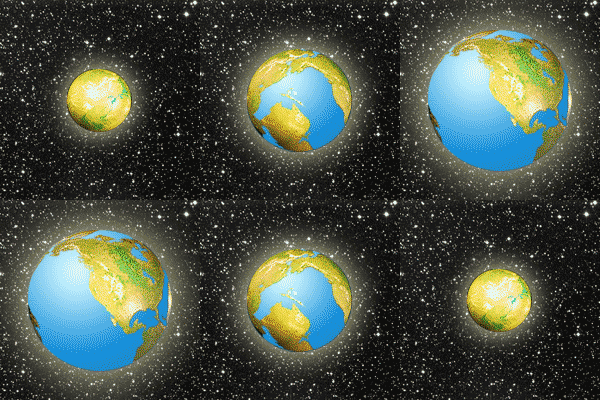
Our modern understanding of the interior and behaviors of the Earth is strongly based around plate tectonics and the concept of subduction. But before this idea was widely accepted in the late 20th century, a good number of scientists subscribed to the much more fantastical theory that the Earth was forever increasing in volume. The expanding Earth hypothesis stated that phenomena like underwater mountain ranges and continental drift could be explained by the fact that the planet was gradually growing larger. As the globe’s size grew, proponents argued, the distances between continents would increase, as would the Earth’s crust, which would have explained the creation of new mountains. The theory has a long and storied past, beginning with Darwin, who briefly tinkered with it before casting it aside, and Nikola Tesla, who compared the process to that of the expansion of a dying star.
How it was Proven Wrong:
The expanding Earth hypothesis has never been proven wrong exactly, but it has been widely replaced with the much more sophisticated theory of plate tectonics. While the expanding Earth theory holds that all land masses were once connected, and that oceans and mountains were only created as a result of the planet’s growing volume, plate tectonics explains the same phenomena by way of plates in the lithosphere that move and converge beneath the Earth’s surface.

Spontaneous Generation


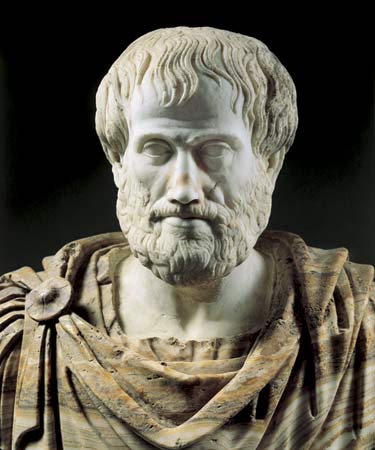
Although it might seem a bit ludicrous today, for thousands of years it was believed that life regularly arose from the elements without first being formed through a seed, egg, or other traditional means of reproduction. The main purveyor of the theory was Aristotle, who based his studies on the ideas of thinkers like Anaximander, Hippolytus, and Anaxagoras, all of whom stressed the ways in which life could spontaneously come into being from inanimate matter like slime, mud, and earth when exposed to sunlight. Aristotle based his own ideas on the observation of the ways maggots would seemingly generate out of dead animal carcass, or barnacles would form on the hull of a boat. This theory that life could literally spring from nothing managed to persist for hundreds of years after Aristotle, and was even being proposed by some scientists as recently as the 1700s.
How it was Proven Wrong:
It was only with the adoption of the scientific method that many of the classical theories like spontaneous generation began to be tested. Once they were, they quickly crumbled. For example, famed scientist Louis Pasteur showed that maggots would not appear on meat kept in a sealed container, and the invention of the microscope helped to show that these same insects were formed not by spontaneous generation but by airborne microorganisms.

The Discovery of Vulcan


Vulcan was a planet that nineteenth century scientists believed to exist somewhere between Mercury and the Sun. The mathematician Urbain Jean Joseph Le Verrier first proposed its existence after he and many other scientists were unable to explain certain peculiarities about Mercury’s orbit. Scientists like Le Verrier argued that this had to be caused by some object, like a small planet or moon, acting as a gravitational force. La Verrier called his hypothetical planet Vulcan, after the Roman god of fire. Soon, amateur astronomers around Europe, eager to be a part of a scientific discovery, contacted Le Verrier and claimed to have witnessed the mysterious planet making its transit around the Sun. For years afterward, Vulcan sightings continued to pour in from around the globe, and when La Verrier died in 1877, he was still regarded as having discovered a new planet in the solar system.
How it was Proven Wrong:
Without La Verrier acting as a cheerleader for Vulcan’s existence, it suddenly began to be doubted by many notable astronomers. The search was effectively abandoned in 1915, after Einstein’s theory of general relativity helped to explain once and for all why Mercury orbited the Sun in such a strange fashion. But amateur stargazers continued the search, and as recently as 1970 there have been people who have claimed to see a strange object orbiting the sun beyond Mercury. Amusingly, the entire would-be discovery’s greatest legacy today is that it inspired the name of the home planet of the character Spock from Star Trek.

Wylie Coywolf: The coyote-wolf hybrid has made its way to the Northeast


Bigger than coyotes but smaller than wolves, their howl is high-pitched and their diet includes deer and small rodents. They are "coywolves" (pronounced "coy," as in playful, "wolves"), and they are flourishing in the northeastern U.S., according to a study published today in Biology Letters.

Although coyote–wolf breeding has been reported in Ontario, where coyotes started migrating from the Great Plains in the 1920s, this study provides the first evidence of coywolves—also known as coydogs or eastern coyotes—in the Northeast. And even though they are more coyote (Canis latrans) than wolf (gray wolves are Canis lupus, and red wolves are Canis rufus), the expansion of these hybrids into western New York State marks the return of wolves to the Empire State.


Stem cells bring new insights to future treatment of vision--and neural--disorders


neural stem cells visionBALTIMORE—Deep in the brain, buried in the hippocampus and subventricular zone, reside adult neural stem cells, cells that retain the ability to become other types of neural cells and could serve as possible treatments for ailments ranging from vision impairment to Parkinson's to spinal cord injuries. Doctors, scientists and patients, however, are understandably hesitant to go digging around for them, their location being "a great deterrent," Sally Temple, founder of the New York Neural Stem Cell Institute, said at the 2009 World Stem Cell Summit here on Wednesday.

Researchers, therefore, are anxious to uncover other, more accessible neural stem cell candidates. Temple and her team have turned their sights to the retinal pigment epithelium (RPE), a layer of tissue at the base of the retina that comes into being within 30 to 50 days of conception, before many other parts of the neural system differentiate. Cells from this area of the eye can be easily harvested from retinal fluid that is usually discarded during retinal surgery, she explained.

Meteorite impacts turn up nearly pure water ice in Mars's mid-latitudes


Ice crater on MarsPlanetary scientists looking for water ice on Mars have employed a number of tactics to great success in their search. The Phoenix lander dug it up; orbiting radar measurements have seen it under insulating blankets of debris. (Frozen water sublimates to vapor in Mars's climate and so is not stable when exposed at the surface.)

Now a team of researchers has let meteorite impacts do the digging for them—a paper in this week's Science presents observations of fresh impacts and what they turn up from below the surface.

Using instruments on NASA's Mars Reconnaissance Orbiter (MRO), a group led by Shane Byrne, a planetary scientist at the University of Arizona's Lunar and Planetary Laboratory, found five recent impact craters in the Martian mid-latitudes, near the boundary where subsurface ice is thought to be no longer tenable. All were relatively small, ranging in size from about four to 12 meters across.


AIDS vaccine surprises scientists, proves partially successful


new aids vaccine promise preventionIn an early-morning announcement today, researchers reported that an experimental HIV (human immunodeficiency virus) vaccine effectively reduced the number of people who contracted the virus by nearly a third.

Tested in a U.S.-sponsored trial that involved more than 16,000 volunteers in Thailand, the vaccine was administered in six injected doses starting in 2006 to half of the group, and the other half received a placebo. Seventy-four people in the placebo group had contracted HIV by the end of the trial, whereas only 51 of the vaccinated group tested positive.* The injections consisted of two vaccines that had proven unsuccessful on their own: Sanofi-Aventis SA's ALVAC and VaxGen Inc.'s AIDSVAX.

The results came as a surprise to HIV-vaccine skeptics in the AIDS (acquired immunodeficiency syndrome) research field, whose numbers have increased after years of failed vaccine trials. "It's safe to say that the scientific community is caught off-guard," Mitchell Warren, director of the AIDS Vaccine Advocacy Coalition, told Bloomberg News. Before the announcement, Marie-Paule Kieny, director of the World Health Organization's Initiative for Vaccine Research, told the news service: "I don't think that there is a lot of expectation that the efficacy of this vaccine will be very high." A 2007 clinical trial of a vaccine made by Merck was stopped when researchers found that, in fact, more people who received the active vaccine (49) than the placebo (33) had contracted HIV.